
Paulin Hountondji and the Science Question in Africa by Zeyad El Nabolsy
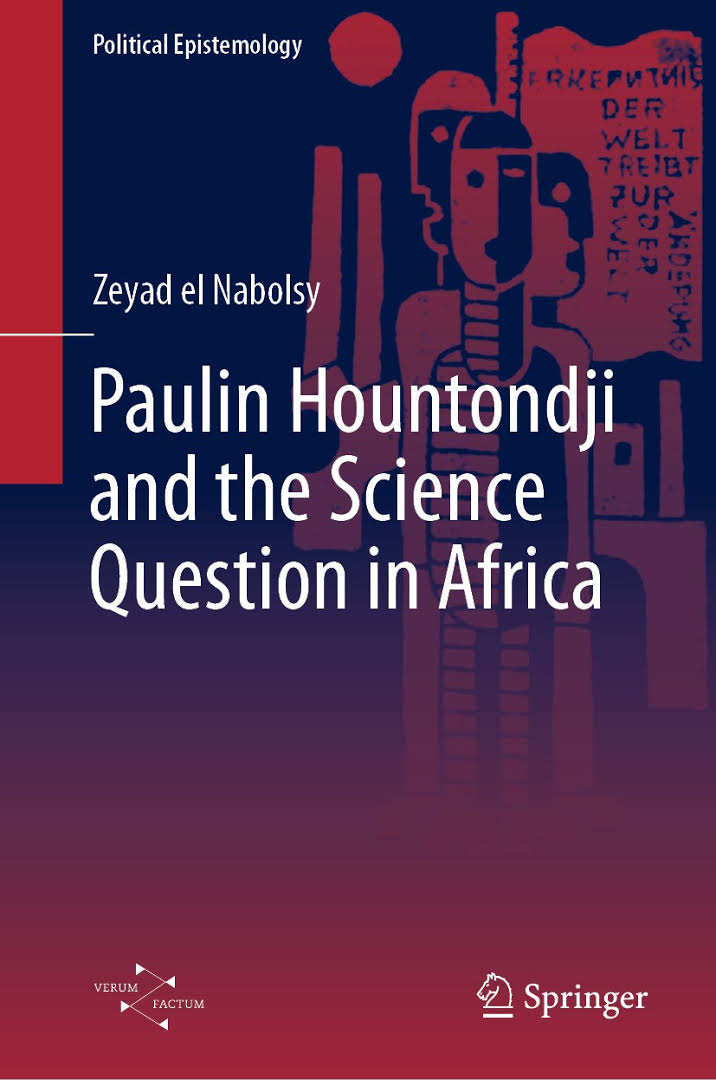
Paulin Hountondji and the Science Question in Africa by Zeyad El Nabolsy
By Nathalie Agbessi
In 2014, I obtained my baccalauréat, série D. This diploma, equivalent to the A-level in the anglophone context, was intended to prepare me for a career in the sciences. On the advice of family and relatives, I enrolled in a degree in Biology and Plant Physiology at the Université de Lomé (UL). Well, by now you can probably tell that my ambitions in science did not go very far.
I left not only because I have always had a taste for the Humanities and the arts, but more so because my experience at UL as a first-year undergraduate student was very disappointing. Although we had enough plants and other objects of inquiry around us, the university at the time was severely lacking in basic lab support and other core facilities to sustain learning and research. In such conditions, it is not surprising that vaccines and preventive care are often exported to the continent or that scientific research in general struggles to flourish on the continent. Zeyad El Nabolsy’s Paulin Hountondji and the Science Question in Africa answers the questions I, and many others, ask about the roots of the challenges faced by modern scientific inquiry on the continent.
The book has a total of seven chapters that present El Nabolsy’s reading of Hountondji’s ideas, as well as a critique of some of the claims advanced by the Beninese thinker. In the second chapter, he highlights how European thinkers who link philosophy to science, such as Husserl and especially Althusser, shape Hountondji’s view of philosophy as a theory of science. He then turns to Hountondji’s critique of African philosophy by showing how it often positions itself as an “ethnophilosophy” which, rather than theorizing science, crowds out the hard questions about how knowledge is actually produced, who sets research agendas, who funds labs, and how curricula and institutions are built.
The third chapter traces how 1960s Marxist debates on science and technology shape Hountondji’s thinking about science in Africa. It also highlights El Nabolsy’s reading of Hountondji’s ideas through dependency theory. The key move here is to reject the idea that technology is just applied science and to argue that existing tools and production often set the problems that science later explains. Technological capacity is thus presented as a precondition for modern science, and science is central to sustained development. In Europe, capitalism historically accumulated technology and industry, which helped drive scientific growth. Conversely, in Africa, colonial capitalism established a dependent, export-oriented economy that hindered local industry and technological development. This, in turn, blocked the growth of science. El Nabolsy’s contribution is to make the connection between science, technology, and philosophy in Africa explicit: if colonial economic structures undercut technology, they also undercut science, which helps explain today’s scientific dependency and the failure of contemporary African intellectuals to produce a theory of science, which in Hountondji’s view is the purpose of philosophy.
In the fourth chapter, El Nabolsy gives more details about colonialism’s influence on the development of modern science in Africa by challenging the assumption that modern education, particularly scientific education, developed during colonization. He argues here that European colonization in Africa was organized around extraction rather than modernization. If anything, colonial states did not build the scientific or technological capacities they claimed to possess. El Nabolsy demonstrates how education was designed for cheap labor and basic literacy, with science and the arts sidelined; even in the French case, “learned Africans” mainly emerged by accident, not as a result of colonial policy. He highlights African intellectuals like David Boilat, whose book I previously reviewed on this blog, and Africanus Horton as examples of Africans who pursued scientific research despite facing systemic discouragement. On this basis, El Nabolsy critiques Hountondji’s idea that Africa lacked a second stage of scientific activity centered on theory by arguing that theorization was attempted but structurally blocked. The result was not an absence of initiative but the deliberate suppression of institutions that could have supported science.
In the fifth chapter, El Nabolsy highlights Hountondji’s call for a real engagement between modern science and endogenous African knowledge, which is knowledge produced within African research communities, and argues that Africa’s scientific underdevelopment stems from failing to integrate endogenous research with modern scientific methods and institutions.

Paulin Hountondji, courtesy Prince claus Fund
The 6th chapter of this book is personally my favorite one because it shows how, in Hountondji’s thought, modern science is actually conceptualized beyond its Western origin. Instead, it is presented as an ethos, a methodology that views innovation as central to the production of knowledge. El Nabolsy goes further by showing how Hountondji’s view of science contradicts contemporary critiques of science that tend to conflate “the modern” with “the western”. He also demonstrates how scientific inquiry in Africa, before modernity, was centered on the mastery and preservation of knowledge. In the North African cases, El Nabolsy illustrates how certain sciences were basically complete, leaving little room for novelty. Personally, a cultural echo of this preservation-first stance on knowledge is the Yoruba saying Ìṣẹ̀ṣe l’ágba (“tradition is supreme”), where pre-existing forms of knowledge are seen as complete instead of being sources of inquiry.
El Nabolsy’s conclusion and final chapter reconstructs Hountondji’s sociology of scientific dependency by listing the concrete indicators (from reliance on Northern equipment and information systems to brain drain, donor-driven agendas, applied-over-basic research, extraversion of authorship, and weak South–South ties) not to deny African agency but to guide alternative, autonomy-building science policies. He also cautions that marrying historical-materialist analysis with dependency theory can institutionalize modern science in Africa, integrate endogenous knowledge, and reject the relativism that treats modern science as merely a colonial construct.
Overall, this book offers a concise yet detailed evaluation of African philosophers’ reflections on science, with El Nabolsy extending the discussion to include thinkers like Kwasi Wiredu, Kwame Gyekye, and Anthony Appiah. Paulin Hountondji and the science question in Africa is excellent for anyone interested in learning about the intellectual history of science and for those involved in shaping science policy on the continent. Since the language isn’t always accessible to non-specialists, I recommend watching the philosopher on screen through here .